Does Your Church Need Some Love?
Common Capital Needs in Historic Congregations
Valentine's Day isn't just for romantic relationships—it's a perfect time to consider the other loves in our lives. And for many church leaders, few things inspire more affection (and anxiety) than the historic buildings entrusted to their care.
If you serve a congregation in a building that's been standing for 50, 75, or even 150 years, you know the reality: these beautiful structures require constant attention, significant investment, and occasionally, major capital intervention. The question isn't whether your building needs work—it's whether this is the year your leadership finally addresses those mounting needs through a comprehensive capital campaign.
Let's talk about the most common ways historic church buildings are crying out for some serious love.
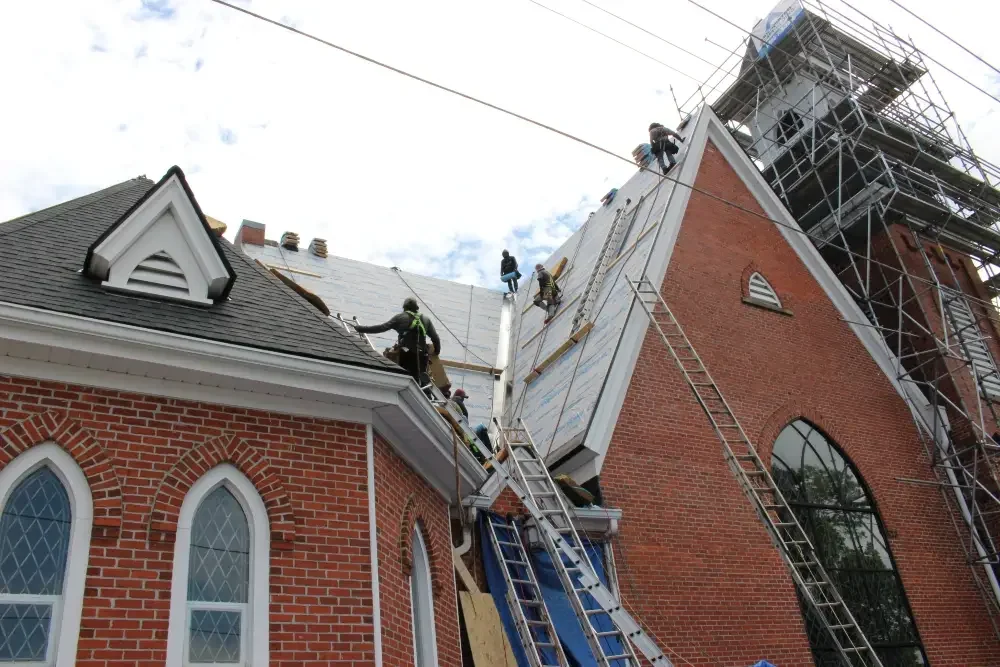
1. The Roof Over Your Head (Literally)
Nothing strikes fear into a church treasurer's heart quite like the phrase "roof replacement."
Historic church roofs weren't designed to last forever, yet many congregations have pushed their roofing systems decades past their intended lifespan. You know you're in trouble when you're moving buckets around the sanctuary during rainstorms, when ice dams form every winter causing interior damage, or when your insurance company starts asking pointed questions during annual reviews.
A new roof on a historic church isn't a simple residential roofing job. These buildings often feature:
Complex pitch and valley systems
Slate, tile, or specialty materials requiring expert installation
Historic preservation requirements if you're in a designated district
Heights and configurations that demand specialized equipment
The reality check: Roof replacement for a mid-sized historic church typically runs $150,000-$400,000 depending on size and materials. That's not a line item you can absorb in the annual budget.
The theological truth: A leaking roof isn't just a maintenance issue—it's a stewardship issue. Water damage compounds exponentially. What starts as a minor leak becomes damaged plaster, rotted wood, mold remediation, and destroyed furnishings. Addressing your roof proactively is biblical stewardship of the resources God has entrusted to your care.
2. Tuckpointing and Masonry Restoration
That beautiful brick exterior that gives your church such historic character? It's slowly deteriorating.
Water is the enemy of historic masonry. When mortar joints deteriorate, water penetrates the brick, causing:
Freeze-thaw cycles that crack and spall brickwork
Interior water damage and staining
Structural instability in severe cases
Accelerated deterioration of surrounding areas
Many church leaders put off tuckpointing because it seems cosmetic. It's not. Deteriorated mortar is a structural issue that worsens dramatically over time. What might cost $75,000 to address today could easily become $200,000+ in five years when you're replacing entire sections of brick rather than just repointing mortar.
The visibility factor: Your building is your congregation's most visible witness to the community. Crumbling brickwork and deteriorating mortar sends a message: "We're in decline." Fresh, well-maintained masonry communicates: "This congregation takes stewardship seriously and plans to be here for generations."
3. HVAC and Boiler Systems
Few things unite a congregation quite like a Sunday morning when the heat fails in January or the air conditioning dies during a July wedding.
Historic churches face unique HVAC challenges:
Original boiler systems that are 40+ years old and shockingly inefficient
Radiator heating that's expensive to operate and impossible to zone
Inadequate air conditioning (or none at all) making summer ministry difficult
Poor air circulation that contributed to health concerns during the pandemic
Thermostats from the Carter administration
The financial argument: Energy costs for inefficient systems can run $20,000-$40,000 annually more than modern, properly-sized equipment. A $250,000 HVAC replacement might pay for itself in 10-12 years just through energy savings—while also making your building comfortable for ministry year-round.
The ministry impact: How many potential members visited on a sweltering July Sunday and never returned? How many youth group events get cancelled because the basement is too cold in winter? Your HVAC system directly impacts your ability to fulfill your mission.
4. Accessibility and ADA Compliance
Here's the uncomfortable truth many historic church leaders face: The beloved building that's served your congregation for generations is actively excluding people from full participation.
Historic churches were built in an era with no consideration for accessibility. The results are heartbreaking:
Long-time members who can no longer navigate steps to enter the sanctuary they helped build
Families with children in wheelchairs who can't access Sunday School classrooms on the second floor
Elderly congregants unable to use restrooms because of narrow doorways and tight spaces
Members with mobility challenges who can't serve as liturgists, choir members, or communion servers because they can't reach the chancel
The biblical imperative: Accessibility isn't optional—it's a justice issue. When our buildings prevent people from worshiping and serving, we're failing to embody the inclusive gospel we preach. Jesus welcomed everyone to the table. Our buildings should too.
Accessibility improvements typically include:
Ramp or lift installation at primary entrances
Elevator addition to access multiple floors
Restroom renovation for ADA compliance
Doorway widening and threshold removal
Chancel accessibility for worship leaders
The generational reality: Your congregation is aging. The members who are 60 today will be 75 in fifteen years. Accessibility improvements aren't just for hypothetical future members—they're for your current members' future needs.
5. Electrical System Modernization
Your historic church was wired for a different era of ministry. The building that once needed electricity only for lights and an organ now struggles to support:
Contemporary sound and projection systems
Livestreaming equipment for digital ministry
Adequate lighting for aging eyes
Security systems and cameras
Computers, printers, and office technology throughout the building
Kitchen equipment for fellowship events
Many historic churches are still operating on electrical systems designed for 1950s or 1960s loads. The symptoms include:
Circuit breakers that trip constantly
Insufficient outlets forcing extension cord daisy-chains (fire hazards)
Flickering lights and voltage fluctuations
Inability to run multiple systems simultaneously
Insurance concerns about outdated wiring
The mission connection: Digital ministry isn't optional anymore. Your ability to livestream worship, maintain a website, provide online giving, and connect with people digitally depends on adequate electrical infrastructure. An electrical system upgrade isn't about keeping up with technology trends—it's about removing barriers to gospel proclamation in the 21st century.
When Multiple Needs Converge: The Capital Campaign Moment
Here's what I've observed after partnering with dozens of historic congregations: These capital needs rarely occur in isolation.
The church that needs a new roof also discovers water damage requiring masonry work. The HVAC replacement reveals electrical inadequacy. The accessibility project expands to include restroom renovation. What starts as one project quickly becomes a $300,000, $500,000, or even $1 million comprehensive renovation.
This convergence creates both a challenge and an opportunity.
The challenge: Multiple major capital needs can feel overwhelming. Where do you even start? How do you prioritize? Can you really ask your congregation to fund all of this at once?
The opportunity: Comprehensive campaigns are often more successful than piecemeal approaches. When you can cast vision for "fully renovating our historic building for another 100 years of faithful ministry," donors respond more enthusiastically than "we need a new roof." People give to transformation, not to maintenance.
The Stewardship Question Every Historic Church Faces
Buildings don't last forever without significant reinvestment. Historic church buildings require periodic major capital infusions—typically every 20-30 years—to remain functional and faithful to their original purpose.
The previous generation made those investments. The sanctuary where you worship, the fellowship hall where you gather, the education wing where children learn—all of it exists because a previous generation of leaders chose stewardship over neglect.
Now it's your turn.
The question isn't whether your building needs work. You already know it does. The question is: Will this generation of leaders demonstrate the same faithful stewardship that previous generations showed?
Your grandchildren will inherit the decisions you make today. They'll either worship in a building that's been well-maintained and thoughtfully updated for 21st-century ministry, or they'll struggle with deferred maintenance and mounting crises because leadership chose to kick the can down the road.
From Anxiety to Action: The Capital Campaign Path
I understand the anxiety church leaders feel when contemplating major capital projects. The needs feel overwhelming. The costs seem insurmountable. The congregation's capacity appears limited.
But here's what I've learned after walking alongside more than 100 congregations through successful capital campaigns: Churches are far more capable and generous than their leaders typically imagine.
When vision is clear, when needs are well-documented, when leadership demonstrates unified commitment, and when campaigns are professionally guided, congregations consistently exceed expectations. Churches that worried they might raise $500,000 celebrate reaching $750,000. Members who've given modestly for years make sacrificial six-figure commitments. Unity emerges. Generosity multiplies. Faith deepens.
Capital campaigns aren't just fundraising projects—they're spiritual movements that transform congregations while also addressing facility needs.
Does Your Church Need Some Love This Valentine's Day?
If you've been reading this article nodding along, recognizing your own building's needs in every paragraph, it might be time to seriously explore a capital campaign.
You don't need to have all the answers before you start. You don't need certainty about every detail. You just need clarity that your building requires significant investment, willingness to explore the possibilities, and openness to discovering what God might do through your congregation's generosity.
At Solheim Stewardship, we specialize in partnering with historic congregations facing exactly these challenges. We understand the unique dynamics of older buildings, the emotional attachment members feel to beloved spaces, and the theological framework that makes capital campaigns spiritual journeys rather than mere fundraising projects.
We'd welcome the opportunity to offer you a complimentary consultation to discuss your building's needs, your congregation's capacity, and whether a capital campaign might be your next faithful step. There's no obligation—just an honest conversation about your situation and the possibilities ahead.
Because your historic building has served generations faithfully. Now it's time to give it the love it needs to serve generations more.
Contact us to schedule your complimentary consultation.
Show your church building some love this Valentine's Day. Future generations will thank you for it.