The Question That Predicts Campaign Success: "Who Will Go First?"
I can predict a church capital campaign's success within the first few weeks—often before the public launch, sometimes before the campaign leadership team even meets for the first time.
The question isn't "How much can we raise?" or "Do we have enough generous givers in our congregation?"
It's simpler and more revealing: "Who will go first?"
After guiding over 100 campaigns across denominational lines, I'm convinced that leadership giving—both its timing and its size—is the single most predictive factor in campaign outcomes. Not your vision statement. Not your feasibility study results. Not even your goal amount.
Who gives first, and how much they give, signals to every subsequent household whether this campaign is a genuine movement of the Spirit or merely an organizational initiative.
Leadership has two dimensions
Most churches think about leadership giving only in terms of size—the major gifts that anchor the campaign and set the standard for everyone else. That matters enormously.
But leadership is also about timing.
Church council members, elders, deacons, and the pastor who give early—even modest amounts relative to the overall goal—demonstrate spiritual conviction in a way that the broader congregation simply can't. They're the shepherds saying "We believe God is calling us to this, and we're responding first with our own commitments before asking you to discern yours."
That witness is irreplaceable.
Here's my benchmark: I want to see the church council, elders, and pastoral staff give early in the process AND see the top three gifts from the gift profile chart committed before the campaign cabinet or leadership team even meets for the first time.
Why? Because when campaign leaders walk into that initial meeting and discover that church leadership has already responded with their own commitments and the top leadership gifts are secured, they're joining a campaign that's already gaining momentum. They're participating in something God is already doing, not trying to manufacture enthusiasm from scratch.
That spiritual and psychological shift changes everything.
The campaign that starts behind
Compare that to the more common scenario: A church recruits an impressive campaign cabinet, gathers them for a commissioning meeting, and asks them to "help us reach our goal." Only then does the cabinet discover that the council hasn't fully committed and there are no significant lead gifts yet secured.
The cabinet feels set up to fail. And often, they're right.
Because leadership giving isn't just about stewardship—it's about witness. When the people in spiritual leadership won't lead with their own commitments, it raises an unspoken question in every member's heart: "If the elders and pastor aren't responding sacrificially, is this really what God is calling us to?"
The pastor's unique role
The pastor's early commitment carries particular weight. Not because it needs to be the largest gift—it almost certainly won't be—but because it demonstrates pastoral conviction.
When a pastor stands before the congregation and says "My family has prayed about this, and we've made our three-year commitment," it communicates something profound: This isn't just an organizational initiative I'm leading professionally. This is a spiritual movement I'm participating in personally.
That kind of pastoral leadership gives the congregation permission to enter into prayerful discernment themselves.
I've watched church campaigns stall when pastors treated them as programs they were managing rather than movements they were joining. And I've watched campaigns exceed their goals when pastors led from a place of personal conviction and sacrificial response.
Going first is an act of faith
Lead donors in the church context—whether council members giving early or families making top-tier commitments—are taking a public risk. They're signaling faith before the outcome is certain. They're making themselves vulnerable in community.
That act of faith invites others into the same posture of trust.
I've watched church campaigns stall not because the congregation lacked capacity, but because no one was willing to go first. And I've watched campaigns far exceed their goals because a few leaders stepped forward early in faith and created a gravitational pull that made generous response feel like the natural outcome of discipleship.
The hard diagnostic question
If your church council or elders won't give first—or if you can't secure your top leadership gifts before engaging your broader campaign team—you don't have a fundraising problem.
You have a spiritual alignment problem. Or a trust problem. Or a readiness problem.
The campaign won't solve those issues. It will expose them.
Leadership giving is diagnostic. It reveals whether your church leadership has actually discerned God's call clearly enough to respond sacrificially. And if they haven't, no amount of campaign materials or compelling presentations will compensate.
What the New Testament shows us
The pattern of going first appears throughout Scripture. Paul consistently highlights the sacrificial giving of the Macedonian churches as an example that prompts others to generosity. The early church in Acts sees leaders selling property and bringing the proceeds to the apostles—visible acts of commitment that shape the community's culture.
Leadership giving has always been about witness. About going first so others can follow. About demonstrating faith in ways that invite others into the same posture of trust and generosity.
Timing matters as much as size
In my research on capital campaigns and stewardship formation, I keep returning to this question of sequence. The church campaigns that result in genuine congregational transformation—not just reaching financial goals—almost always begin with spiritual leaders willing to go first.
To pray first. To discern first. To commit first. To make themselves vulnerable in community before asking others to do the same.
The timing of their giving matters as much as the size.
Because church capital campaigns aren't ultimately about buildings or budgets. They're about forming disciples in the practice of sacrificial generosity. And that formation begins with leaders who are willing to demonstrate what faithful response looks like.
An invitation to reflection
If you're considering a capital campaign, or if you're in the early stages of one, take a moment to ask:
Have your spiritual leaders—council, elders, pastor—made their own commitments first? Not as a fundraising tactic, but as a genuine response to what they believe God is calling your congregation toward?
Have your top leadership gifts been secured before you've asked your broader campaign team to engage?
If not, it may be worth pausing to create the space for that leadership witness to emerge. Because the campaigns that truly transform congregations don't begin with compelling cases or ambitious goals.
They begin with leaders willing to go first.
Does Your Church Need Some Love?
Church repairs are often the catalyst for considering a capital campaign.
Common Capital Needs in Historic Congregations
Valentine's Day isn't just for romantic relationships—it's a perfect time to consider the other loves in our lives. And for many church leaders, few things inspire more affection (and anxiety) than the historic buildings entrusted to their care.
If you serve a congregation in a building that's been standing for 50, 75, or even 150 years, you know the reality: these beautiful structures require constant attention, significant investment, and occasionally, major capital intervention. The question isn't whether your building needs work—it's whether this is the year your leadership finally addresses those mounting needs through a comprehensive capital campaign.
Let's talk about the most common ways historic church buildings are crying out for some serious love.
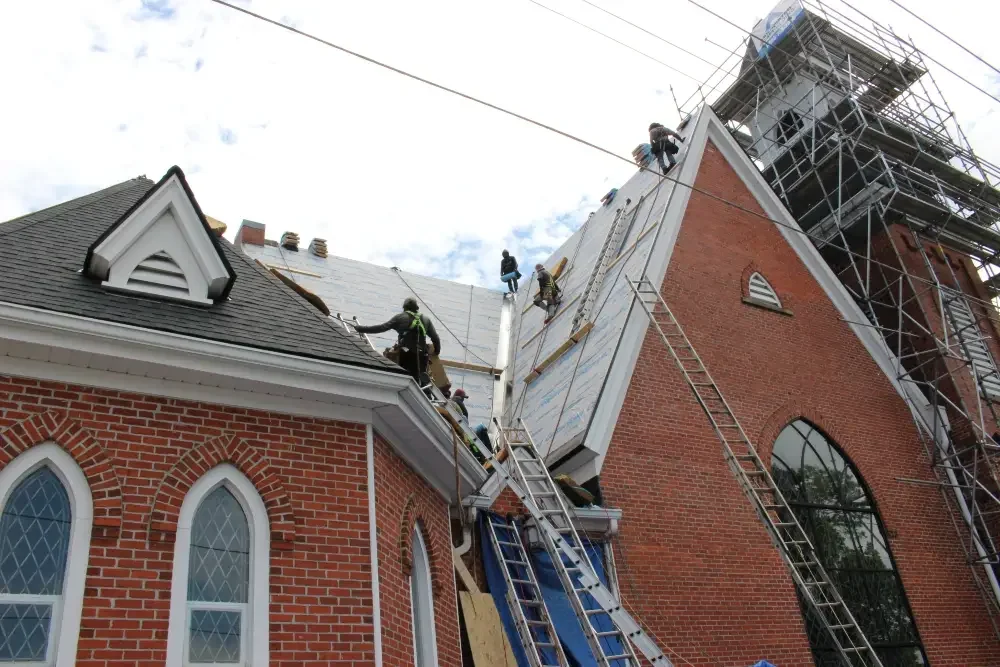
1. The Roof Over Your Head (Literally)
Nothing strikes fear into a church treasurer's heart quite like the phrase "roof replacement."
Historic church roofs weren't designed to last forever, yet many congregations have pushed their roofing systems decades past their intended lifespan. You know you're in trouble when you're moving buckets around the sanctuary during rainstorms, when ice dams form every winter causing interior damage, or when your insurance company starts asking pointed questions during annual reviews.
A new roof on a historic church isn't a simple residential roofing job. These buildings often feature:
Complex pitch and valley systems
Slate, tile, or specialty materials requiring expert installation
Historic preservation requirements if you're in a designated district
Heights and configurations that demand specialized equipment
The reality check: Roof replacement for a mid-sized historic church typically runs $150,000-$400,000 depending on size and materials. That's not a line item you can absorb in the annual budget.
The theological truth: A leaking roof isn't just a maintenance issue—it's a stewardship issue. Water damage compounds exponentially. What starts as a minor leak becomes damaged plaster, rotted wood, mold remediation, and destroyed furnishings. Addressing your roof proactively is biblical stewardship of the resources God has entrusted to your care.
2. Tuckpointing and Masonry Restoration
That beautiful brick exterior that gives your church such historic character? It's slowly deteriorating.
Water is the enemy of historic masonry. When mortar joints deteriorate, water penetrates the brick, causing:
Freeze-thaw cycles that crack and spall brickwork
Interior water damage and staining
Structural instability in severe cases
Accelerated deterioration of surrounding areas
Many church leaders put off tuckpointing because it seems cosmetic. It's not. Deteriorated mortar is a structural issue that worsens dramatically over time. What might cost $75,000 to address today could easily become $200,000+ in five years when you're replacing entire sections of brick rather than just repointing mortar.
The visibility factor: Your building is your congregation's most visible witness to the community. Crumbling brickwork and deteriorating mortar sends a message: "We're in decline." Fresh, well-maintained masonry communicates: "This congregation takes stewardship seriously and plans to be here for generations."
3. HVAC and Boiler Systems
Few things unite a congregation quite like a Sunday morning when the heat fails in January or the air conditioning dies during a July wedding.
Historic churches face unique HVAC challenges:
Original boiler systems that are 40+ years old and shockingly inefficient
Radiator heating that's expensive to operate and impossible to zone
Inadequate air conditioning (or none at all) making summer ministry difficult
Poor air circulation that contributed to health concerns during the pandemic
Thermostats from the Carter administration
The financial argument: Energy costs for inefficient systems can run $20,000-$40,000 annually more than modern, properly-sized equipment. A $250,000 HVAC replacement might pay for itself in 10-12 years just through energy savings—while also making your building comfortable for ministry year-round.
The ministry impact: How many potential members visited on a sweltering July Sunday and never returned? How many youth group events get cancelled because the basement is too cold in winter? Your HVAC system directly impacts your ability to fulfill your mission.
4. Accessibility and ADA Compliance
Here's the uncomfortable truth many historic church leaders face: The beloved building that's served your congregation for generations is actively excluding people from full participation.
Historic churches were built in an era with no consideration for accessibility. The results are heartbreaking:
Long-time members who can no longer navigate steps to enter the sanctuary they helped build
Families with children in wheelchairs who can't access Sunday School classrooms on the second floor
Elderly congregants unable to use restrooms because of narrow doorways and tight spaces
Members with mobility challenges who can't serve as liturgists, choir members, or communion servers because they can't reach the chancel
The biblical imperative: Accessibility isn't optional—it's a justice issue. When our buildings prevent people from worshiping and serving, we're failing to embody the inclusive gospel we preach. Jesus welcomed everyone to the table. Our buildings should too.
Accessibility improvements typically include:
Ramp or lift installation at primary entrances
Elevator addition to access multiple floors
Restroom renovation for ADA compliance
Doorway widening and threshold removal
Chancel accessibility for worship leaders
The generational reality: Your congregation is aging. The members who are 60 today will be 75 in fifteen years. Accessibility improvements aren't just for hypothetical future members—they're for your current members' future needs.
5. Electrical System Modernization
Your historic church was wired for a different era of ministry. The building that once needed electricity only for lights and an organ now struggles to support:
Contemporary sound and projection systems
Livestreaming equipment for digital ministry
Adequate lighting for aging eyes
Security systems and cameras
Computers, printers, and office technology throughout the building
Kitchen equipment for fellowship events
Many historic churches are still operating on electrical systems designed for 1950s or 1960s loads. The symptoms include:
Circuit breakers that trip constantly
Insufficient outlets forcing extension cord daisy-chains (fire hazards)
Flickering lights and voltage fluctuations
Inability to run multiple systems simultaneously
Insurance concerns about outdated wiring
The mission connection: Digital ministry isn't optional anymore. Your ability to livestream worship, maintain a website, provide online giving, and connect with people digitally depends on adequate electrical infrastructure. An electrical system upgrade isn't about keeping up with technology trends—it's about removing barriers to gospel proclamation in the 21st century.
When Multiple Needs Converge: The Capital Campaign Moment
Here's what I've observed after partnering with dozens of historic congregations: These capital needs rarely occur in isolation.
The church that needs a new roof also discovers water damage requiring masonry work. The HVAC replacement reveals electrical inadequacy. The accessibility project expands to include restroom renovation. What starts as one project quickly becomes a $300,000, $500,000, or even $1 million comprehensive renovation.
This convergence creates both a challenge and an opportunity.
The challenge: Multiple major capital needs can feel overwhelming. Where do you even start? How do you prioritize? Can you really ask your congregation to fund all of this at once?
The opportunity: Comprehensive campaigns are often more successful than piecemeal approaches. When you can cast vision for "fully renovating our historic building for another 100 years of faithful ministry," donors respond more enthusiastically than "we need a new roof." People give to transformation, not to maintenance.
The Stewardship Question Every Historic Church Faces
Buildings don't last forever without significant reinvestment. Historic church buildings require periodic major capital infusions—typically every 20-30 years—to remain functional and faithful to their original purpose.
The previous generation made those investments. The sanctuary where you worship, the fellowship hall where you gather, the education wing where children learn—all of it exists because a previous generation of leaders chose stewardship over neglect.
Now it's your turn.
The question isn't whether your building needs work. You already know it does. The question is: Will this generation of leaders demonstrate the same faithful stewardship that previous generations showed?
Your grandchildren will inherit the decisions you make today. They'll either worship in a building that's been well-maintained and thoughtfully updated for 21st-century ministry, or they'll struggle with deferred maintenance and mounting crises because leadership chose to kick the can down the road.
From Anxiety to Action: The Capital Campaign Path
I understand the anxiety church leaders feel when contemplating major capital projects. The needs feel overwhelming. The costs seem insurmountable. The congregation's capacity appears limited.
But here's what I've learned after walking alongside more than 100 congregations through successful capital campaigns: Churches are far more capable and generous than their leaders typically imagine.
When vision is clear, when needs are well-documented, when leadership demonstrates unified commitment, and when campaigns are professionally guided, congregations consistently exceed expectations. Churches that worried they might raise $500,000 celebrate reaching $750,000. Members who've given modestly for years make sacrificial six-figure commitments. Unity emerges. Generosity multiplies. Faith deepens.
Capital campaigns aren't just fundraising projects—they're spiritual movements that transform congregations while also addressing facility needs.
Does Your Church Need Some Love This Valentine's Day?
If you've been reading this article nodding along, recognizing your own building's needs in every paragraph, it might be time to seriously explore a capital campaign.
You don't need to have all the answers before you start. You don't need certainty about every detail. You just need clarity that your building requires significant investment, willingness to explore the possibilities, and openness to discovering what God might do through your congregation's generosity.
At Solheim Stewardship, we specialize in partnering with historic congregations facing exactly these challenges. We understand the unique dynamics of older buildings, the emotional attachment members feel to beloved spaces, and the theological framework that makes capital campaigns spiritual journeys rather than mere fundraising projects.
We'd welcome the opportunity to offer you a complimentary consultation to discuss your building's needs, your congregation's capacity, and whether a capital campaign might be your next faithful step. There's no obligation—just an honest conversation about your situation and the possibilities ahead.
Because your historic building has served generations faithfully. Now it's time to give it the love it needs to serve generations more.
Contact us to schedule your complimentary consultation.
Show your church building some love this Valentine's Day. Future generations will thank you for it.
Is Your Church at a Defining Moment? How to Respond to God's Call to a Capital Campaign
God calls a church to consider a capital campaign that will impact generations to come. The discernment of this call and the response to are pivotal times in the life of a congregation!
Every congregation faces crossroads—moments when leadership must choose between comfortable maintenance and courageous faithfulness. If you're reading this article, your church may be approaching one of those defining moments right now.
Perhaps your facilities no longer support your growing ministry. Maybe you're turning families away because you lack adequate space for children's programs. Or you've outgrown your worship center and find yourselves running multiple services just to accommodate everyone. These aren't just logistical challenges—they're symptoms of a deeper question your leadership must answer: Is God calling us to step out in faith?
Capital Campaigns Aren't Really About Buildings
After walking alongside dozens of church leadership teams through successful capital campaigns, I've learned something counterintuitive: the most transformational campaigns aren't primarily about fundraising or construction. They're about spiritual leadership.
Buildings are bricks and mortar. A capital campaign is a spiritual invitation—an opportunity for this generation of leaders to demonstrate courageous faith that will echo through decades of your congregation's future.
When your grandchildren walk into your church fifty years from now, what story will they tell about the leaders who served in 2026?
Will they say: "Our elders heard God calling them to something bigger than themselves. They were afraid—the goal seemed impossible—but they trusted that the God who called them would provide. And God did. Everything changed after that."
Or will the story be different: "They almost did something remarkable. They talked about it, prayed about it. But in the end, they played it safe. We've been trying to catch up ever since."
The Real Question Isn't "Can We Afford This?"
Church boards often get stuck on financial feasibility. It's understandable—you're responsible stewards of God's resources, and a capital campaign represents a significant financial commitment.
But here's what I've observed across hundreds of church capital campaigns: The churches that exceed their goals don't start with certainty about the money. They start with clarity about God's call.
The question before your leadership isn't "Can we afford this?" The real question is: "Is God calling us to this—and if so, will we trust Him enough to follow?"
Because here's a biblical truth that plays out repeatedly in successful church campaigns: Faithful obedience always precedes provision.
Abraham didn't have Isaac when God made the promise. Moses didn't have a strategy when he faced the Red Sea. The disciples didn't have resources when Jesus said "feed the five thousand." In each case, God's call came first. Leaders responded in faith. Provision followed.
What God Does Through Capital Campaigns
The churches I've partnered with that dramatically exceed their campaign goals—raising $3 million when they projected $2 million, uniting previously fractured communities, witnessing unprecedented generosity—all share something in common. Their leadership teams chose to believe that God's call is God's provision.
But the transformation goes far beyond the financial outcome. Here's what happens when a congregation walks through a faith-stretching capital campaign:
Unity Emerges
When a congregation watches their elders lead with sacrificial personal commitment, something shifts. When members see their pastor investing not just words but substantial personal resources into the vision, credibility deepens. When the session or board demonstrates unified support, the congregation follows. Capital campaigns have a remarkable ability to unite churches around shared purpose.
Generosity Multiplies
Churches consistently discover that their members are far more generous than leadership imagined. Major gifts emerge from unexpected sources. People who've given modestly for years make sacrificial commitments that reshape their personal finances. Younger members engage in giving conversations for the first time. A culture of generosity takes root that extends far beyond the campaign itself.
Faith Deepens
For elders and board members, leading a capital campaign becomes one of the most spiritually formative experiences of their leadership tenure. Not because it's easy—it isn't. But because they witness God showing up in ways they couldn't have orchestrated. Prayers get answered. Obstacles dissolve. Resources appear at precisely the right moment. Leadership's own faith expands through the journey.
Witness Strengthens
When the wider community observes a church so unified and purposeful that hundreds of members willingly invest millions in its mission, that's a powerful testimony. It demonstrates that this congregation genuinely believes in what they're doing. Capital campaigns become evangelistic tools, showing the community that your church is serious about its future impact.
The Spiritual Reality of Campaign Leadership
Let me be direct with church leaders considering a capital campaign: This decision will stretch you spiritually. You'll face moments of doubt. There will be nights when the goal seems impossible. You'll wonder if you're leading your congregation toward success or potential embarrassment.
But here's what elders consistently tell me after their campaigns conclude: It becomes the most meaningful spiritual experience of their leadership service.
Why? Because they got to participate in something genuinely miraculous. They watched God honor faithfulness. They experienced provision that defied logical explanation. They led their congregation through a journey that deepened everyone's trust in God's ability to do "immeasurably more than all we ask or imagine."
Your role as a church leader isn't to guarantee campaign success before you begin. Your role is to discern God's call and courageously lead your congregation to follow it. The guarantee comes from God, not from a business plan.
Recognizing God's Call
So how do you know if God is calling your church to a capital campaign? Here are the signs I consistently observe:
Holy discontent - Leadership feels a growing restlessness with the status quo, a sense that God is inviting you to something more.
Vision clarity - You can articulate not just what you want to build but why it matters for your mission and community impact.
Leadership unity - Your pastors, elders, and key lay leaders are aligned around the vision, not just willing to go along with it.
Congregational readiness - Your church demonstrates financial stability, growing attendance, and positive ministry momentum.
Spiritual confirmation - Through prayer, Scripture, and wise counsel, leadership senses God's affirmation.
If you're recognizing these signs, you may indeed be at a defining moment.
The Legacy You'll Leave
Consider this: Most of your work as a church leader involves necessary but unmemorable tasks—budget reviews, policy decisions, facility maintenance. Important work, certainly. But not legacy-defining.
Every few decades, however, a leadership team faces a decision that genuinely matters for generations. A decision that their great-grandchildren will talk about. A decision that reshapes their church's trajectory for fifty years.
This may be yours.
The question isn't whether you currently have all the resources. The question is whether you're willing to step out in faith when God calls—even when it's scary, even when the numbers seem impossible, even when comfortable would be easier.
Because when Joshua faced Jericho, the walls didn't fall until the priests stepped into the Jordan. When Peter walked on water, the miracle didn't happen until he climbed out of the boat. Faith precedes the miracle. Always.
Your Next Faithful Step
If you sense God calling your church to a capital campaign, the next step isn't to have all the answers. It's to begin the discernment process prayerfully and strategically.
Successful church capital campaigns don't happen accidentally. They require expert guidance, proven methodology, and theological depth. But more than anything, they require church leaders willing to follow God's call into transformational faithfulness.
At Solheim Stewardship, we specialize in walking alongside Presbyterian and other Protestant congregations through these defining moments. We bring both fundraising expertise and deep theological understanding to help your leadership team discern God's call and execute a campaign that succeeds.
Is your church approaching a defining moment? Let's explore whether God is calling you to step out in faith. Contact us at rob@solheimstewardship.com to begin the conversation.
Because faithful leadership today becomes your congregation's testimony for generations to come.
7 Signs Your Congregation is Ready for a Capital Campaign
Are you ready for a capital campaign? There are seven signs to determine the readiness of your congregation. A capital campaign is an important step in the life of a congregation and you want to be as ready as you can for this ministry experience.
Every church leader dreams of what their congregation could accomplish with adequate facilities, updated technology, expanded ministry space or investing in outreach and impact. But dreaming about a capital campaign and being ready for one are two different things.
Over my years of consulting with churches across the Midwest, I've seen campaigns that soared past their goals and others that struggled to gain traction. The difference rarely comes down to the size of the congregation or the appeal of the project. Instead, it's about readiness—whether the church has the right conditions in place for a successful campaign.
If you're wondering whether your congregation is ready to launch a capital campaign, here are seven signs that indicate the time might be right.
1. Your Vision is Clear and Compelling
A capital campaign needs more than a budget line item—it needs a story.
Your congregation should be able to articulate not just what you want to build or accomplish, but why it matters for your mission. The best campaigns connect a tangible project to transformed lives and expanded ministry impact. When people can see how new space will enable youth ministry growth, how accessible facilities will welcome elderly members, or how updated technology will strengthen worship, they lean in.
What to look for: Does discussing the project generate genuine excitement in leadership meetings? Can your pastor preach about it without it feeling forced? If your vision inspires energy rather than obligation, you're on the right track.
2. Leadership is United and Committed
Nothing undermines a capital campaign faster than fractured leadership.
Your pastor, session or board, and key lay leaders need to be genuinely aligned—not just willing to go along with the majority vote. This unity extends beyond verbal support to sacrificial financial commitment. Leadership sets the tone, and if board members are hedging their own giving or expressing doubts, the congregation will sense it immediately.
I've watched campaigns stall because one influential elder kept asking "do we really need this?" in every meeting. Conversely, I've seen smaller churches exceed expectations because every leader could authentically say, "I believe in this, and I'm giving accordingly."
What to look for: Can your leadership honestly say "we're all in"—with their time, energy, and treasure? Are leaders prepared to make their commitments early and publicly?
3. The Church is Financially Stable
Capital campaigns aren't rescue missions for churches in financial crisis.
While a successful campaign can position a church for long-term growth, it requires operating from a place of stability, not desperation. Your congregation should be meeting its annual budget consistently, maintaining adequate reserves, and keeping any existing debt manageable. When members see that the church handles regular finances well, they're far more likely to trust leadership with a major campaign.
Churches that are deferring maintenance, cutting staff, or constantly behind on bills need to address operational health before asking members for significant capital commitments. A campaign can't fix systemic giving problems—it can only build on existing stewardship momentum.
What to look for: Has your annual giving been steady or growing over the past 2-3 years? Are you able to maintain facilities and meet payroll without constant special appeals? Can you point to responsible financial management?
4. The Congregation Has Been Included in the Conversation
Surprises might work for birthday parties, but they're terrible for capital campaigns.
The most successful campaigns emerge from congregational conversation, not leadership pronouncements. Members need to be part of the visioning process—sharing their hopes, voicing concerns, and praying together about the future. When people help shape the vision, they develop ownership. When it's handed to them fully formed, they become spectators rather than participants.
This doesn't mean decision-by-committee or endless processing. It means intentional listening sessions, congregational input opportunities, and transparent communication about how decisions are being made. By the time you formally launch a campaign, the congregation should be thinking "finally, we're doing this!" rather than "where did this come from?"
What to look for: Have you conducted surveys, hosted town halls, or created feedback opportunities? When you mention the project informally, do people express enthusiasm or confusion? Does the congregation feel informed and included?
5. You Have a Realistic Timeline
Effective capital campaigns can't be rushed.
A well-executed campaign typically requires 12-18 months from initial planning through pledge fulfillment. This includes feasibility assessment, leadership preparation, case statement development, quiet phase fundraising, public campaign launch, and follow-through. Churches that try to compress this timeline—often because of urgent building needs or impatient leadership—frequently underperform their potential.
Your project should be urgent enough to motivate action but not so immediate that you need funds in three months. If your roof is literally caving in or your lease expires next quarter, address those crises first through emergency fundraising or bridge financing. Then launch a proper campaign from a position of stability.
What to look for: Can you realistically give the campaign 12-18 months? Is your project timeline flexible enough to accommodate a proper campaign? Are you willing to do this right rather than fast?
6. There's Congregational Momentum
Capital campaigns amplify existing energy—they rarely create it from nothing.
The healthiest campaigns happen in churches where worship attendance is stable or growing, new members are joining, ministries are flourishing, and there's a general sense of forward movement. This doesn't mean everything is perfect or that you've solved every challenge. But it does mean the congregation's trajectory is positive.
If your church is experiencing significant decline, conflict, or drift, those issues need attention before a campaign. A building project won't fix deeper problems with mission clarity, leadership health, or congregational engagement. In fact, launching a campaign in an unhealthy environment often exacerbates existing tensions.
What to look for: How would you describe your church's current state? Do words like "growing," "unified," or "excited" come naturally? Or are you reaching for "struggling," "divided," or "plateaued"? Be honest—momentum matters.
7. Leadership is Willing to Invest in Expert Guidance
Capital campaigns require specialized expertise that most church leaders simply don't possess.
You wouldn't ask a talented musician to perform surgery just because they're skilled with their hands. Similarly, being an effective pastor or elder doesn't automatically translate to capital campaign expertise. The dynamics of major gift solicitation, pledge fulfillment strategies, donor cultivation, and campaign communications are learned skills.
Churches that attempt DIY campaigns—relying solely on a borrowed manual or advice from a friend—typically raise 30-50% less than professionally guided campaigns. The consultant's fee pays for itself many times over through increased results, reduced stress on leadership, and avoidance of costly mistakes.
If you're reading this article and researching best practices, you're already demonstrating the kind of learning posture that indicates readiness. Being willing to invest in professional guidance isn't a sign of weakness—it's a sign of wisdom.
What to look for: Has your leadership budgeted for professional consultation? Are you prepared to learn from someone who's guided dozens of campaigns? Or are you hoping to figure it out as you go?
What's Your Readiness Score?
As you read through these seven signs, how many resonated with your congregation's current reality?
If you recognize 5-7 of these signs: Your church is likely ready to explore a capital campaign seriously. The conditions are in place for success, and the timing may be right to move forward with feasibility assessment and planning.
If you see 3-4 of these signs: You're in the zone where some preparatory work could make the difference between a struggling campaign and a successful one. Consider which gaps need attention and create a 6-12 month plan to address them before launching.
If fewer than 3 signs ring true: Focus on building organizational health before attempting a major fundraising initiative. Work on leadership unity, financial stability, or congregational engagement. A campaign launched prematurely rarely succeeds and can actually set your church back.
Taking the Next Step
Capital campaigns represent significant opportunities for congregational growth, expanded ministry, and faithful stewardship. But they also require careful discernment about timing and readiness.
The good news? Most of these readiness factors are within your control. With intentional leadership, honest assessment, and appropriate preparation, many churches can position themselves for campaign success within 6-12 months.
Wondering whether your congregation is truly ready? I'd welcome the opportunity to discuss your church's unique situation in a no-obligation consultation. Together, we can explore whether a capital campaign is your next faithful step—or what preparatory work might strengthen your position for future success.
Lentils and Leadership
Lentils and Leadership explores the role of Shammah in 2 Samuel and relates it to the tasks and missions we are called to lead in our stewardship ministries.
In my doctoral program on leadership, I recently wrote a paper about a “minor” biblical leader. The point of the paper was to glean leadership lessons from leaders who don’t make the headlines in the Bible that we typically read about. I am sparing you the length of the paper and offer a summary of the document here.
In 2 Samuel 23, we find a brief but powerful account of Shammah, one of David’s mighty men. His story is often overlooked, yet it carries profound lessons for leaders today. Shammah was appointed for a specific role, stood firm in defending what seemed insignificant, remained obedient to David and God, and achieved victory through God’s faithfulness. His example reminds us that leadership isn’t always about grand, visible victories—sometimes, it’s about faithfully stewarding the small, seemingly unimportant tasks that contribute to a greater mission.
Appointed for a Purpose
Shammah didn’t choose his battle—he was assigned to it. Scripture tells us that while others fled from the Philistines, he stood his ground in a lentil field (2 Samuel 23:11-12). At first glance, defending a field of lentils may seem trivial compared to the larger battles David’s men fought. Yet, Shammah didn’t question his assignment. He understood that his role, though perhaps unglamorous, was part of a bigger picture.
As leaders, we may be called to tasks that don’t feel transformational. We might oversee a small team, manage routine operations, or work behind the scenes. But like Shammah, we must recognize that every role matters in God’s plan. Faithfulness in the "small" things prepares us for greater responsibilities (Luke 16:10).
Defending What Others Overlooked
Why a lentil field? In ancient Israel, lentils were a staple food—humble but essential. The Philistines likely saw it as an easy target, but Shammah saw it as worth defending. Others retreated, but he held his ground because he understood that even the "small" things contribute to the larger mission.
In leadership, we will face moments where we must stand firm in areas others disregard. Whether it’s maintaining integrity when no one is watching, investing in people who aren’t "high-profile," or upholding values when it’s inconvenient, Shammah’s example challenges us to defend what God has entrusted to us—no matter how insignificant it may seem.
Obedience to Authority and God
Shammah’s loyalty wasn’t just to the land—it was to David and, ultimately, to God. His obedience reflected his trust in the leadership God had established. He didn’t act independently; he fulfilled his duty within the broader vision of David’s kingdom.
As leaders, we must also submit to authority and align our actions with God’s will. Even when our tasks feel mundane, obedience matters. Additionally, we must trust the teams around us—leaders and followers alike—to fulfill their roles, knowing that together, we contribute to a mission larger than ourselves.
Success Through God’s Faithfulness
Shammah didn’t win because of his own strength—Scripture says "the Lord brought about a great victory" (2 Samuel 23:12). His success was rooted in God’s faithfulness, not his own ability.
Likewise, our achievements as leaders depend on God’s power, not our efforts alone. When we commit to our assignments with diligence and trust in Him, He produces the results.
Leadership Lessons from Shammah
Shammah’s story teaches us:
Every role matters—stay faithful where God has placed you.
Defend what others overlook—what seems small may be vital.
Remain obedient—to God and those He has placed in authority.
Trust God for the outcome—success comes from His hand.
May we, like Shammah, be leaders who stand firm in our assignments, knowing that our obedience today contributes to God’s greater plan tomorrow.
A Fig Tree and a Capital Campaign
This story of the fig tree in the Gospel of Luke, resonates deeply with the process of preparing for a capital campaign in ministry. Just like the fig tree, a campaign requires the right conditions, careful nurturing, and time to bear fruit. Some organizations may be ready to launch a campaign in just a few months. Their "soil" is fertile—strong leadership, clear vision, and a united congregation or team. For them, the conditions are perfect, and the campaign can move forward quickly.
In Luke 13:6-9, Jesus tells the parable of the fig tree, a story rich with lessons about patience, persistence, and the importance of nurturing growth. A man plants a fig tree in his vineyard, but after three years, it still bears no fruit. Frustrated, he considers cutting it down. However, the gardener pleads for more time, promising to tend to the tree, fertilize it, and give it another chance to bear fruit. The parable reminds us that growth takes time, and with care and patience, even the most barren tree can flourish.
This story resonates deeply with the process of preparing for a capital campaign in ministry. Just like the fig tree, a campaign requires the right conditions, careful nurturing, and time to bear fruit. Some organizations may be ready to launch a campaign in just a few months. Their "soil" is fertile—strong leadership, clear vision, and a united congregation or team. For them, the conditions are perfect, and the campaign can move forward quickly.
But for others, the journey to readiness is longer. Perhaps there are leadership changes to navigate, construction plans to finalize, or a need to build consensus among stakeholders. These challenges are not setbacks; they are part of the process. Just as the gardener in the parable tended to the fig tree, we must tend to the groundwork of our campaigns. This might mean investing time in strategic planning, fostering open communication, or addressing internal challenges before moving forward.
The key is patience and persistence. A rushed campaign, like a prematurely harvested fig, will not yield the best results. But when we commit to the process—when we take the time to prepare, pray, and plan—we create the conditions for a campaign that bears abundant fruit for the Kingdom of God.
This principle applies not only to capital campaigns but to all areas of life and ministry. Growth is rarely instantaneous. Whether we’re waiting for a fig tree to bear fruit, a campaign to gain momentum, or a dream to come to fruition, we must trust in God’s timing. The waiting period is not wasted time; it’s an opportunity to deepen our faith, refine our plans, and align our efforts with God’s purpose.
As we reflect on the parable of the fig tree, let us remember that patience and persistence are not passive virtues. They require active engagement—tending to the soil, pruning the branches, and trusting that with time and care, the fruit will come. When we commit to the outcome, we honor the process, knowing that our efforts, rooted in faith, will ultimately glorify God and advance His Kingdom.
So, whether you’re preparing for a capital campaign or waiting for a season of growth in your life, take heart. Like the gardener, be patient. Be persistent. And trust that in God’s perfect timing, your efforts will bear fruit beyond what you can imagine.
If you are considering a capital campaign, please reach out to us for more information on how your campaign can break fruit for your congregation.
Summer Capital Campaign Planning
Use the summer months to prepare for an impactful church capital campaign this fall. Brainstorm ideas to allocate funds for building needs, ministry growth, staff support, or an endowment. Gather feedback from leadership groups and the congregation to ensure the campaign aligns with your church’s mission and community needs. Build a diverse leadership team to champion the effort. Decide whether to run a stand-alone campaign or integrate it with your annual stewardship appeal for added synergy. By planning ahead, you can create a compelling vision, engage your congregation, and set the stage for a successful autumn kickoff. #ChurchCapitalCampaign #Stewardship #ChurchGrowth #MinistryPlanning
Although spring officially arrives tomorrow, I find my own thoughts are drawn forward in time to summer! When the days grow longer and the warmth of summer settles in, churches often experience a natural shift in rhythm. While summer is traditionally a time for vacations, rest, and fellowship, it also presents a unique opportunity to lay the groundwork for a successful autumn kickoff for a capital campaign. A capital campaign is a significant undertaking, requiring careful planning, thoughtful leadership, and broad congregational engagement. By using the summer months to brainstorm, gather feedback, and build a strong leadership team, your church can set the stage for a meaningful and impactful campaign that addresses both immediate needs and long-term goals.
1. Brainstorming Ideas for Allocation of Funds
One of the first steps in planning a capital campaign is determining how the funds raised will be allocated. Summer provides an ideal time to brainstorm and prioritize the needs of your church. These needs often fall into several categories:
Building Needs: Many churches face maintenance, renovation, or expansion projects. Whether it’s repairing a leaky roof, updating outdated facilities, or building a new space for ministry, addressing building needs is often a primary focus of capital campaigns. Consider conducting a facility assessment to identify urgent and long-term projects.
Ministry Needs: A capital campaign can also support the growth and development of ministries within the church. This might include funding for children’s programs, youth outreach, missions, or community service initiatives. Think about how your church can better serve its members and the broader community.
Program Needs: Programs such as music, education, and small groups are vital to the life of the church. Consider how a capital campaign could enhance these programs, whether through new resources, technology, or staffing.
Staff Needs: Investing in staff is an investment in the future of your church. A capital campaign could fund additional staff positions, provide professional development opportunities, or improve compensation packages to attract and retain talented leaders.
Planning for an Endowment: For long-term sustainability, some churches choose to allocate a portion of capital campaign funds to an endowment. This ensures that the church has a financial foundation to support its mission for years to come.
Use the summer months to gather input from key stakeholders, including church staff, lay leaders, and ministry teams. Create a list of potential projects and prioritize them based on urgency, impact, and alignment with your church’s mission and vision.
2. Gathering Feedback from Leadership Groups and the Congregation
A successful capital campaign requires broad support and engagement from the congregation. Summer is an excellent time to gather feedback on your ideas and ensure that the campaign reflects the needs and aspirations of your church community.
Start by engaging various leadership groups within the congregation, such as the church council, finance committee, and ministry leaders. Share your initial ideas and invite their input. What do they see as the most pressing needs? How do they envision the church growing and serving in the coming years?
Next, consider hosting listening sessions or surveys to gather feedback from the broader congregation. This not only helps you refine your plans but also fosters a sense of ownership and investment in the campaign. Ask questions like:
What do you value most about our church?
What needs do you see in our church or community?
How would you like to see our church grow or change in the next 5–10 years?
Engaging the larger community in this conversation can also be valuable. Reach out to neighbors, local organizations, and community leaders to understand how your church can better serve them. This outreach can strengthen your church’s ties to the community and highlight the broader impact of your campaign.
3. Building a Diverse and Representative Leadership Team
The success of a capital campaign often hinges on the strength of its leadership team. Summer is the perfect time to identify and recruit individuals who can champion the campaign and inspire others to get involved.
When building your leadership team, aim for diversity and representation. Include members from different age groups, backgrounds, and areas of involvement within the church. This ensures that the campaign resonates with the entire congregation and reflects the varied needs and perspectives of your church community.
Look for individuals who are passionate about the church’s mission, have strong communication skills, and are respected within the congregation. Consider appointing co-chairs or a steering committee to share the workload and bring different strengths to the table.
Once your team is in place, use the summer to provide training and resources. Equip them with the tools they need to communicate the campaign’s vision, answer questions, and inspire others to give. A well-prepared leadership team will be instrumental in building momentum and enthusiasm for the campaign.
4. Deciding on the Campaign’s Scope and Timing
As you plan your capital campaign, consider whether it will be a stand-alone effort or integrated with your annual fall stewardship appeal. Each approach has its advantages:
Stand-Alone Campaign: A dedicated capital campaign allows you to focus exclusively on your fundraising goals and communicate a clear, compelling vision. This approach works well for large-scale projects that require significant resources and a concentrated effort.
Integrated Campaign: Combining your capital campaign with your annual stewardship appeal can create powerful synergies. It allows you to emphasize the connection between ongoing ministry support and special projects, reinforcing the idea that every gift contributes to the church’s mission. This approach can also simplify the giving process for congregants.
Use the summer to weigh the pros and cons of each option and decide which approach aligns best with your church’s goals and culture. If you choose to integrate the campaigns, plan how you will communicate the dual focus and ensure that both efforts receive adequate attention.
5. Preparing for the Autumn Kickoff
With your plans in place and your leadership team ready, use the latter part of summer to prepare for the autumn kickoff. This might include:
Developing a compelling case statement that outlines the campaign’s goals, impact, and vision.
Creating promotional materials, such as brochures, videos, and social media content.
Planning kickoff events, such as a special worship service, banquet, or community outreach day.
Setting up systems for tracking donations and communicating progress to the congregation.
By taking these steps during the summer, you’ll be well-prepared to launch your campaign with energy and enthusiasm in the fall.
Conclusion: Embracing the Call to a Capital Campaign
As we journey through Lent and look ahead to the advent of summer, let’s embrace the change of pace as an opportunity to reflect on God’s call to stewardship and growth. A capital campaign is more than a fundraising effort—it’s a chance to dream boldly, serve faithfully, and build a legacy that honors God’s work in your church and community.
By using the summer months to brainstorm, gather feedback, build a leadership team, and prepare for the autumn kickoff, your church can lay a strong foundation for a successful campaign. As you plan, remember that this effort is not just about meeting financial goals but about deepening your congregation’s commitment to God’s mission and strengthening your church’s impact for years to come. Let this summer be a season of preparation, prayer, and possibility as you embark on this exciting journey.
Multi-generational congregations and stewardship
Our congregations are made up of people from multiple generations and that has an impact on how stewardship is viewed, practiced, and communicated. This article dives into the benefits and practical impacts of those differences.
I recently had a write an article for my PhD program on the role of generational diversity in the workplace. It got me to thinking about the multi-gen setting of our congregations. Generational attitudes impact the practice of stewardship. Here is the article re-worked without all the academic stuff in it- formatted as a blog post. How do you think generational perspectives on stewardship might impact a capital campaign in your congregation?
The modern workplace is a dynamic tapestry woven from the threads of diverse generations, each contributing its unique blend of experiences, values, and perspectives. This generational tapestry, while a source of vibrant innovation and a rich pool of talent, also presents a unique set of challenges for leaders and organizations. Understanding the nuances of these generational differences is crucial for fostering a harmonious and productive work environment where everyone feels valued and respected.
This article will delve into the characteristics of the four primary generations currently shaping the workplace: the Silent Generation, Baby Boomers, Generation X, and Millennials. We will explore the potential benefits and challenges arising from this generational diversity, and discuss strategies for effective leadership in a multigenerational environment.
Generational Overview:
The Silent Generation (1925-1945): Shaped by the hardships of the Great Depression and the sacrifices of World War II, this generation is characterized by a strong work ethic, unwavering loyalty to their employers, and a deep respect for authority and traditional values. They are often described as patient, disciplined, and dedicated to their careers.
Baby Boomers (1946-1964): This large cohort witnessed significant social and political upheaval, including the Civil Rights Movement and the Vietnam War. They are known for their ambition, competitiveness, and strong desire for personal and professional achievement. They are often described as team players, optimistic, and driven by a strong sense of purpose.
Generation X (1965-1981): Coming of age during an era of economic uncertainty and rapid technological advancements, Gen Xers are known for their independence, adaptability, and skepticism towards authority. They value flexibility, work-life balance, and results-oriented approaches. They are often described as independent, resourceful, and tech-savvy.
Millennials (1982-1999): Raised in the digital age, Millennials are tech-savvy, collaborative, and value work-life balance and meaningful work. They are often described as optimistic, tech-savvy, and collaborative, with a strong sense of social responsibility.
The Benefits of Generational Diversity:
A multigenerational workforce offers numerous advantages. The diverse perspectives, experiences, and skill-sets of different generations can fuel innovation and creativity. For example, the technological expertise of younger generations can be invaluable in developing new products and services, while the seasoned wisdom and industry knowledge of older generations can provide valuable guidance and mentorship.
Reciprocal mentoring programs, where members of different generations learn from each other, can be highly beneficial. Younger employees can gain invaluable insights from the experience and industry knowledge of their older colleagues, while older employees can learn about new technologies and communication styles from younger generations.
Addressing the Challenges:
While the benefits of a multigenerational workforce are significant, it also presents unique challenges. Differences in communication styles, work expectations, and values can sometimes lead to misunderstandings and conflicts.
Communication Styles: Younger generations often prefer more informal and digital communication channels, such as instant messaging and social media, while older generations may prefer face-to-face interactions and formal communication.
Work Expectations: Differences in work ethic and expectations can also lead to friction. For example, Baby Boomers, known for their strong work ethic and long hours, may perceive younger generations as less committed. Research bears out that younger generations remain committed to their work, but desire for flexibility in terms of when that work is completed.
Knowledge Transfer: As Baby Boomers approach retirement, ensuring the smooth transfer of their valuable knowledge and experience to younger generations becomes crucial.
Strategies for Effective Leadership:
To effectively manage a multigenerational workforce, leaders must embrace diversity and create an inclusive environment where everyone feels valued and respected. This requires:
Promoting Open Communication: Encourage open dialogue and feedback among employees from all generations. Create safe spaces for employees to share their perspectives and address any concerns.
Fostering Intergenerational Collaboration: Implement initiatives that encourage collaboration and knowledge sharing across generations. This could include cross-generational mentoring programs, joint projects, and social events.
Providing Flexibility: Offer flexible work arrangements that cater to the diverse needs and preferences of different generations. This could include flexible work hours, remote work options, and compressed work weeks.
Recognizing and Valuing Diverse Perspectives: Acknowledge and appreciate the unique contributions of each generation. Recognize and reward employees for their achievements, regardless of their age or background.
Investing in Training and Development: Provide training on generational differences, communication styles, and cultural sensitivity. This can help employees develop a deeper understanding of their colleagues and improve their ability to work effectively together.
Knowledge Transfer and Succession Planning:
As Baby Boomers retire, ensuring the smooth transfer of their knowledge and experience is critical for organizational success.
Develop Robust Knowledge-Sharing Platforms: Implement knowledge-sharing platforms, such as wikis, online databases, and mentorship programs, to capture and disseminate the valuable knowledge and experience of older employees.
Tailor Knowledge Transfer Methods: Utilize a variety of knowledge transfer methods to cater to the learning preferences of different generations. For example, younger generations may prefer digital platforms and interactive learning experiences, while older generations may prefer face-to-face interactions and mentorship.
Implement Effective Succession Planning: Develop clear succession plans to ensure a smooth transition of leadership and expertise within the organization. This involves identifying and developing high-potential employees from all generations.
The Evolving Generational Landscape:
The generational landscape is constantly evolving. As new generations enter the workforce, new dynamics and challenges will emerge. Leaders must stay informed about emerging trends and adapt their management styles accordingly.
Conclusion:
A multigenerational workforce presents both opportunities and challenges. By understanding the unique characteristics and needs of each generation, fostering open communication, and promoting collaboration and knowledge transfer, organizations can create a workplace where all generations thrive and contribute to their full potential.
By embracing diversity and creating an inclusive environment, organizations can harness the power of a multigenerational workforce to drive innovation, enhance productivity, and achieve sustained success in the ever-changing business landscape.
The Ice Storm as a Pivot Point for Stewardship
The recent ice storm brought unexpected challenges to many Midwest churches. Damaged roofs, broken windows, and compromised structures have disrupted worship services and raised concerns about long-term building maintenance. While the immediate focus is on repairs and ensuring the safety of congregants, this unfortunate event presents a unique opportunity for deeper reflection and discernment. Is there more work to be done on our worship and ministry spaces for the future?
The ice storm here in Indiana last week was terrible. In my own community, 60,000 people were without power at one point. Trees were down, roads blocked, and some places of business were closed. I did get a few calls from pastors whose churches were damaged by the ice in some way. We can’t lose sight of the pain and challenges caused by the storm. It is also an opportunity for us to talk about how repairs could be a call to consider what we could be called to do in 2025.
The Ice Wasn’t Nice
The recent ice storm brought unexpected challenges to many Midwest churches. Damaged roofs, broken windows, and compromised structures have disrupted worship services and raised concerns about long-term building maintenance. While the immediate focus is on repairs and ensuring the safety of congregants, this unfortunate event presents a unique opportunity for deeper reflection and discernment about the future of our ministry spaces.
The storm has likely stirred up conversations about deferred maintenance, a common issue for many churches. Aging buildings require ongoing upkeep, and the financial burden of unexpected repairs can be significant. This is a timely reminder of the importance of proactive planning and budgeting for building maintenance. And maybe the storm clean-up offers an opportunity to talk about tackling some of those projects.
Further, the storm may have brought to the forefront long-held desires for renovations or expansions. Perhaps the current space no longer adequately accommodates the church's growing needs, or perhaps there's a vision for a more welcoming and accessible facility. These conversations, often put on hold due to other priorities, may now have the space to flourish.
Beyond Repairs: A Time for Discernment
This period of rebuilding offers a unique opportunity to engage in a wider and more prayerful discernment about the use of church space.
Re-evaluate Current Needs:
How well does the current building serve the church's mission and ministry?
Are there spaces that are underutilized or no longer relevant to the congregation's needs?
Are there accessibility issues that need to be addressed?
Explore New Possibilities:
Could the building be repurposed to better serve the community?
Could it become a hub for outreach and social justice initiatives?
Are there innovative ways to use the space to connect with younger generations?
Consider a Capital Campaign:
A well-planned capital campaign can provide the necessary funding for repairs, renovations, and even new construction.
It can also be a powerful tool for engaging the congregation in a shared vision for the future.
Key Considerations for a Successful Campaign:
Clear and Compelling Vision: Develop a shared vision for the future of the church and how the building will play a role in achieving that vision.
Strong Leadership: Secure the active involvement and support of church leadership, including the pastor, elders, and key lay leaders.
Meaningful Communication: Communicate the vision clearly and consistently to the congregation through various channels, including newsletters, emails, and special meetings.
Engaging the Congregation: Involve the entire congregation in the campaign through volunteer opportunities, fundraising events, and opportunities for personal giving.
Professional Guidance: Seek the expertise of professional fundraising consultants to guide the campaign process and maximize its success.
A Time for Hope and Renewal
While the ice storm presented significant challenges, it also presents an opportunity for renewal and growth. By engaging in a thoughtful and prayerful discernment process, churches can use this time to reimagine their use of space and build a stronger, more vibrant future.
Is 2025 the Right Time for a Church Capital Campaign?
Is your congregation called to a capital campaign for 2025? Is there a ministry that you need to expand or more space needed for ministry? Here are some tips and thoughts to help you get started on the path to a capital campaign.
The Myth of the Perfect Time
Many pastors grapple with the question of timing when considering a capital campaign. Is there a perfect moment, a sweet spot in the church calendar or economic cycle, when stewardship fundraising is guaranteed to succeed? The truth is, there's no such thing.
The reality is that the "perfect time" is often a myth. While external factors like economic conditions and seasonal cycles can influence the success of a campaign, the most critical factor is the internal readiness of your congregation and the clarity of your vision.
Aligning with Your Strategic Vision
The most opportune time to launch a capital campaign is when it aligns with your church's strategic vision and sense of call for ministry and service. A capital campaign should be a tool to help you achieve your long-term goals and fulfilling the calling on your congregation, not a standalone event. If your vision includes building a new facility, expanding ministries, or investing in technology, a capital campaign can provide the necessary resources.
Assessing Your Congregation's Readiness
Before embarking on a capital campaign, it's essential to gauge your congregation's readiness. Consider these factors:
Spiritual Health: Is your congregation spiritually vibrant and engaged? A spiritually healthy congregation is more likely to be generous.
Financial Health: Assess your congregation's giving patterns and capacity. Are they consistently giving to the operating budget?
Leadership Readiness: Do you have a strong leadership team in place, capable of inspiring and motivating the congregation?
Congregational Buy-in: Is there a sense of ownership and excitement about the campaign's goals?
Navigating the Economic Climate
While economic conditions can influence giving, they shouldn't dictate your decision to launch a campaign. A strong campaign, grounded in a compelling vision and executed with faithful leadership, can succeed even in challenging economic times.
Here are some tips for navigating the economic climate:
Be Transparent: Communicate openly and honestly with your congregation about the economic situation and how it may impact the campaign.
Focus on Impact: Highlight the tangible benefits of the campaign and how it will positively impact the community.
Offer Flexible Giving Options: Provide various giving options to accommodate different financial situations.
Ultimately, the decision to launch a capital campaign is a strategic one. By aligning your campaign with your vision, assessing your congregation's readiness, and navigating the economic climate wisely, you can increase your chances of success. Remember, the best time to plant a tree is yesterday. The second-best time is today.
Sunlight and Seeds
Sunlight and seeds yield abundance in the months to come. In the world of church stewardship and capital campaigns, trust and transparency are the sunlight and seeds that yield generosity for disciples and donors in the congregation.
Trust and Transparency in Stewardship
A capital campaign in a church isn't just a march towards bricks and mortar; it's a sacred journey nourished by a delicate, yet powerful, element: trust. But trust, like a delicate seedling, requires sunlight and fertile soil to thrive. In this case, the sunlight is transparency, and the fertile soil is unwavering accountability. Let's explore why these elements are not just vital, but spiritually critical, in cultivating a successful and meaningful campaign.
Our donors, our fellow travelers on this path, deserve clarity about where their gifts will bloom. Detailed financial reports, presented regularly and accessibly, become the sunlight that nourishes their understanding. These reports, infused with honesty and transparency, showcase the meticulous stewardship of their contributions, ensuring every seed of generosity finds its rightful place in the growing project.
A seed grows in the right conditions and so can a capital campaign!
Remember, in a church campaign, the stakes rise beyond mere buildings. We are entrusted with not just funds, but hopes, prayers, and even legacies. This spiritual dimension amplifies our responsibility to be exemplary stewards, demonstrating the highest levels of accountability in every step. From meticulous budgeting to rigorous financial tracking, we weave a tapestry of trust that honors the sacrifices made and inspires future generosity.
Transparency extends beyond numbers. Regular campaign updates, infused with stories and progress markers, humanize the journey. Let your donors see the smiles on children's faces in the new playroom, hear the joyful hymns sung in the renovated sanctuary, and witness the lives touched by their gift. By weaving these narratives into the campaign tapestry, you not only reassure your donors, but also cultivate a shared sense of purpose and excitement.
However, accountability isn't merely a passive act of reporting. It's an open dialogue, an invitation for questions, concerns, and even critiques. Create opportunities for feedback, address anxieties with honesty, and engage your donors in open communication. This active commitment to transparency fosters a sense of partnership, reminding everyone that this is a shared endeavor, fueled by trust and mutual respect.
By embracing these principles, you cultivate a campaign that isn't just about achieving goals, but about building bridges of trust within your community. Remember, sunlight and fertile soil don't just nourish seeds; they create gardens vibrant with life, joy, and shared purpose. Let your campaign be that garden, where trust blossoms alongside bricks and mortar, and where accountability becomes the bedrock for a legacy of generosity and shared faith.
Questions for Reflection
How can we make our financial reports clear, concise, and accessible to the diverse members of our congregation, catering to varying levels of financial literacy?
What creative ways can we integrate compelling stories and progress updates into our campaign communication, showcasing the human impact and emotional resonance of our donors' generosity?
What avenues can we create to proactively address potential concerns and questions from our donors, fostering an open and honest dialogue throughout the campaign?
How can we encourage and incorporate feedback from our congregation into the campaign's direction and decision-making, empowering them to become active partners in the journey?
Beyond the campaign itself, how can we cultivate a culture of ongoing transparency and accountability within our church community, ensuring that stewardship becomes a fundamental pillar of our spiritual practice?
By delving into these questions, you can transform your capital campaign from a fundraising drive into a testament to the transformative power of trust and mutual responsibility. Remember, when sunlight and fertile soil dance together, the seeds of generosity blossom into a community garden where faith, hope, and purpose flourish long after the campaign goals are met.
What Could We Fund with a Capital Campaign?
A needs assessment helps you map out the top priorities that could be funded by a capital campaign.
A successful capital campaign is rooted in a clear understanding of your church's needs and God’s call on the congregation. It's not just about building a bigger building or adding a new program; it's about addressing the specific needs of your congregation and community.
Mapping out the needs for your campaign
A Comprehensive Needs Assessment
Just like getting a rendering for a new building, a needs assessment helps you see what the footprint of your campaign might look like. You can do this informally among the leaders and members of the church or hire a coach/consultant to guide the process. In really big projects, you might do an informal internal assessment and then engage a coach/consultant to validate the results.
To accurately assess your church's needs, consider the following steps:
Involve Your Leadership Team:
Brainstorming Session: Gather your leadership team to discuss potential needs.
SWOT Analysis: Conduct a SWOT analysis (Strengths, Weaknesses, Opportunities, Threats) to identify internal and external factors affecting your 1 church.
Visioning Exercise: Have a visioning session to discuss the church's long-term goals and how a capital campaign can help achieve them.
Seek Input from Church Groups:
Ministry Leaders: Consult with leaders of various ministries to understand their specific needs.
Congregation Surveys: Conduct surveys to gather feedback from your congregation about their priorities and concerns.
Engage the Community:
Community Surveys: Distribute surveys to your neighbors and local businesses to understand their needs and how your church can serve them better.
Community Forums: Host community forums to discuss local issues and how your church can contribute to solutions.
Prayerful Reflection:
Prayer Meetings: Dedicate specific prayer times to seek God's guidance and direction.
Bible Study: Study biblical passages related to stewardship, generosity, and kingdom building.
Prioritizing Needs and Setting Goals
Once you've identified your church's needs, it's time to prioritize them and set realistic campaign goals. Here are some tips:
Align with Your Mission: Ensure that your campaign goals align with your church's mission and vision.
Set Clear and Measurable Goals: Establish specific, measurable, achievable, relevant, and time-bound (SMART) goals.
Prioritize Needs: Rank your needs based on their urgency and impact.
Be Realistic: Set achievable goals that are both ambitious and realistic.
Involve Your Congregation: Share your vision and goals with your congregation and seek their input and support.
By carefully identifying and prioritizing your church's needs, you can create a compelling case for a capital campaign that resonates with your congregation and community. Remember, the most successful campaigns are those that address real needs and inspire people to give generously.
It’s Always the Boiler!
The Case for Support is a document that explains the funding priorities of a church capital campaign. It is a story and a vision for God’s call for a congregation in terms of ministry and stewardship.
The first document you will write for your campaign is called the Case for Support. It actually makes a case for supporting the project or projects that are a part of the capital campaign. At this point, it is really a simple leadership exercise. It might be only a paragraph that answers, “What are we raising money for?”
The Case is the foundational document of the campaign. Not only is it the first thing you write, but you will refer to it frequently during the campaign to keep your work and results focused. It will evolve in a relatively short period of time as well. Through a process of discernment and testing, the document expands to include information about the history of the church and the vision of where the congregation is called to go. It is the articulation of why we are embarking on a journey that will consume significant time, resources, energy, money, and bandwidth that are usually wholly devoted to the ministry of the church. It casts a vision for how ministry and the congregation will be changed when this experience is over. The Case is simple but quite hard to write and it should be. It is hard to build consensus around and that is also healthy! The pain of creating it is growth and pays dividends quickly for the staff, leadership, and members of the congregation.
As the leadership team of the church starts down this road of discerning a campaign, coming up with a short paragraph of your Case will give you a boost as you reach out to potential partners like consultants, architects, or denominational structures.
After you hire a consultant or coach, you will go through a process that tests, strengthens, and expands your Case. I describe that later in the text. For this early phase of discernment, you will learn quite a bit by crafting something on your own. You can test it through prayer and conversation to check the fidelity of your Case against the call of the congregation and the campaign.
It’s Always the Boiler
I think my first several campaigns all began with a boiler going out! Some of my younger colleagues scarcely know what a boiler is, but in many churches, it was the main source of heat for the campus, and in a midwestern church, it was a critical element of success in the winter! Older churches (where I primarily served in my early days) tend to have more mechanical issues than newer and more efficient physical plants. My ministry is rooted in the midwest where boilers are a staple part of the mechanical anatomy of a church operation. If we were lucky, they would go out before the winter season and there would be time for repairs. However, boilers that crashed in the winter tended to raise money faster! Maybe that was the better path! The visceral and visible connection of this part of the church made it easier for people to give. It was something someone could see (and feel when it didn’t work) and that motivates donors.
Generally, when a boiler would fail, it would give church leadership an opportunity to look at other physical plant issues that could be addressed. This was a holy moment to consider ways to make the place we worshipped and learned to be more welcoming, accessible, and efficient. In a number of my previous campaigns, if it weren’t for a failed boiler, the church would not be the updated space it is today with new ministries that were created in the midst of that discernment.
Failing mechanical components were the catalyst to dream bigger. One mentor of mine often shared that the life of the church is so often focused on getting from one Sunday to the next that we rarely have time to consider the larger picture of the vision of our ministry. These moments forced us to pause and dream bigger about our mission and service. While a busted boiler might be the genesis of a campaign, it became the springboard for larger conversations that set the stage for growth, deepened faith, and greater generosity in the congregation.
Whether it is a boiler that goes out, a roof that needs to be repaired, or intermittent flooding in the basement, I have found these physical plant moments have been a path to expansions of ministry and outreach in ways that might not have been a priority if not for a suddenly cold winter morning in a sanctuary full of God’s people.
Thanks for reading Solheim Stewardship ! Subscribe for free to receive new posts and support my work.
Discerning the Call to a Capital Campaign
Listening for the call to a campaign is no easy task. When we survey scripture, some of God’s calls were loud and clear. Other calls were quieter and less obvious. I’ve worked with some churches where a fire or tornado meant it was necessary to build a new worship and ministry space. Their call was clear. I’ve journeyed with churches who were forced to move due to land acquisition and their need could not be denied. A failed boiler is a common cause to look towards a campaign in larger church facilities.
But, I would say, most needs are not so clear. I have seen church leaders wrestle for years about updating worship spaces, starting new programs, expanding ministries, and tackling new community problems without ever coming to a decision. As discussions wear on, leaders change, priorities shift, holidays come, more urgent (and easier to solve matters) take precedence. Shortly thereafter, the leadership forgets the reason they were discussing the original question.
While many churches have already determined they are called to a campaign before I arrive on the scene, a few were still wrestling with the idea. In those cases, I offered a simple discernment process for the leaders of the church.
Anchor this moment in scripture
I encourage pastors and the lay leadership of the congregation to devote time to reflecting on Acts 2:42-47. I offer it to you here from the NRSV:
They devoted themselves to the apostles’ teaching and fellowship, to the breaking of bread and the prayers. Awe came upon everyone, because many wonders and signs were being done by the apostles. All who believed were together and had all things in common; they would sell their possessions and goods and distribute the proceeds to all, as any had need. Day by day, as they spent much time together in the temple, they broke bread at home and ate their food with glad and generous hearts, praising God and having the goodwill of all the people. And day by day the Lord added to their number those who were being saved.
Some questions leaders could reflect on could be:
How might we devote ourselves to scriptural teachings on stewardship?
Might we consider breaking bread over this calling several times during our discernment?
What does our call to a campaign have to say about those in need around us?
How could a call to a campaign be used to glorify God?
Set Aside Time
Discernment of any call takes time. Calls to ministry often take years to flourish, we ask couples to carefully consider their call to marriage, and some discernment and preparation for joining a church often takes some amount of time. But, what each of these shares in common is that time is set aside for each call to be prayerfully considered. In the case of ministry, that could take the form of several years of seminary. For a couple, we often ask them to take six months of time with a pastor or counselor to prepare. For a new believer, formation and education classes could take a few months. In all cases we set aside time for this work. The same should be true for discerning a capital campaign.
Too many times, I have seen it as an agenda item, among many, for a finance committee to decide on and then recommend action to a higher body. While there is nothing wrong with that process, a capital campaign is just too big an item to be lumped in with others. Once leaders think there might be a call to a campaign, we need to set aside time for that. Here are a few ways I have seen that done:
A weekend retreat for ordained and lay leaders of the congregation. They set aside time (like the three examples above) to devote to consideration of the call.
A weeknight retreat was a creative option I was once a part of. The major deliberative bodies of the church met one after another each night of the same week. They all had the same prayer service and discerned five major questions over a two hour period.
A virtual retreat. This happened during the pandemic. While I have some concern about our collective ability to focus in virtual environments, it was all we had at that time. Meeting in person was not an option. So, there were meetings during the week that culminated with a 3-hour session (again virtually) on Saturday of all the major bodies of the church. It was creative and effective!
Come to a conclusion
Let me be clear, we put no limits on when God is done talking and inspiring! I once saw a church take a full three years to decide they were called to a campaign! However, it is simply good stewardship to set some parameters on the time we are willing to devote to making the consideration of the call a priority for the leadership bodies of the congregation.
Some churches can quickly come to realize that they are called to a campaign and can start making preparations very quickly. One church went from their initial conversation to convening a campaign leadership team in two months! I had a hard time keeping up with them! They were literally a congregation on the move so time was of the essence for them. Others have taken much longer and found themselves starting the process over one or more times as significant aspects of the church changed. This really consumed more energy and resources than the church could afford.
We all know in church life that there are competing priorities to consider all the time. Good stewardship of our leaders means that we arrange those priorities in a way that advances the discipleship of the church and honors the time that our leaders devote to their ministry. While ministry priorities can be delegated to faithful volunteers with expertise, campaign considerations are necessarily the purview of the whole body of leaders. Thus, we need to be as efficient as we can with their gifts and talents.
My counsel to congregations is to take prudent time to prioritize discernment, but not longer than six months. If in that time it has not become clear that a campaign is needed, discernment could continue in some other venue or form, but it should no longer be a top leadership priority. By that time, other ministry needs will be demanding attention.
How might we devote ourselves to scriptural teachings on stewardship?
Might we consider breaking bread over this calling several times during our discernment?
What does our call to a campaign have to say about those in need around us?
How could a call to a campaign be used to glorify God?
Thanks for reading Solheim Stewardship ! Subscribe for free to receive new posts and support my work.
The Case as a Spiritual Document
Your campaign’s purpose as a map and spiritual guide.
The “Case for Support” is a one-page document that explains the campaign. They are hard to write and beautiful as an articulation of the call to a campaign. Just as a campaign is a spiritual act of discipleship, the case is a spiritual document.
This isn’t meant to sound “touchy feely” or an attempt to baptize a secular process. I believe down to the marrow of my bones that this is primarily and most importantly a spiritual process that happens to have a spiritual and financial outcome. The Case for Support should be a spiritual document that invites the reader to reflect on their own journey of discernment about how God calls them to respond to the call that has been given to the congregation.
I love the word “vocation”. It comes from the Latin word “vocare” which means call. The capital campaign is a vocation. It is a call from God to do something extraordinary. This is a transformative moment for the congregation. Yes, you will raise an extraordinary amount of money. But, there is more. The family of faith will also dig deep to answer a call to stretch and grow in ways that are only possible with God’s help.
This means the Case for Support is really a spiritual document. It’s not a business plan, but it does have numbers in it. It’s not a schematic, but it might have a rendering on it. It’s not a strategic plan, but it does share something of the process of a campaign. It is an articulation of the next step that God has called the congregation to. It is a moment of vision, trust, faithfulness, and truth!
The “First” Capital Campaign
Is there a scriptural template for capital campaigns? It turns out a story from Exodus might be the inspiration for the process we use today!
A friend of mine often told a story at the beginning of church campaigns. We served as consultants together and were assigned to guide several campaigns across the country. He was the lead consultant and was an amazing storyteller. He shared this passage at story with nearly every client and I would like to share with you. You can find the beginning of the story in Exodus 35:4 to 36:7. Please take a moment to pull out your Bible (or go online!) and read that section now.
It tells the story of Moses calling the people to take up an offering for the construction of the “tent of meeting”. Moses issues the call. He is specific about the vision and the materials that are needed. The people respond. They bring what is needed. Artisans take the donated material to build what God has commanded.
One of my favorite lines from this story is in verse 21: all who were willing and whose heart was moved contributed. Stewardship generally and capital campaigns specifically, are ministry moments of the heart. They happen because of the willingness of the giver. We have a role in inspiring that willing generosity.
My truly favorite line comes in verse 5 and 6 of chapter 36: the people brought too much so Moses told them to stop giving! Imagine that happening in a church today! In this great moment in the life of the family of God, their generosity overflowed. They responded to the need, to God’s call on them, with abundance out of happy obedience and gratitude. As a result, they ended up with more than they needed. Surely, there is much to learn from that.
Was this the first capital campaign recorded in the Bible? Friends, I don’t know. It certainly was an extraordinary effort by God’s people to do something extraordinary for God.
Whatever Moses may have called it, the effort does offer a nice template, for what a faithful journey in stewardship might look like:
A call from God
A leader for the effort
A clear description of of what is needed
Willing and generous givers
Gratitude for the call and the response
As we move into the season where many churches are looking at the potential for a campaign, this story from scripture can be a source of reflection on the wisdom of how to proceed. Let the template be a study guide for church leaders on the future of the congregation. When God gives us a mission or call God also equips us with all we need to fulfill that call.
Campaign Leadership
Selecting campaign leaders is an important task in a campaign and there may be a new leadership model to consider.
I am working with a client has just finished a great Planning Study and is ready to recruit the team that will lead the campaign. The first step in that process is to discern the names of of the chairpersons of the campaign.
The Chairs inspire the committee, speak for the campaign, invite support, handle conflict, and set the pace of the project. Their influence is wide and their commitment is crucial. My best campaigns had amazing stewards serving in the role of Co-Chair and my most difficult campaigns had leaders who really could not fulfill that obligation.
These days, I recommend that campaigns have Co-Chairs that represent three households (I call this the tri-chair model) in the congregation. It would be wise if the diversity of the congregation to include relationship status (meaning inclusion of single or widowed people), age group, ethnicity and one more variable, were represented in the tri-chair model. Please, if your congregation has multiple worship services, include chairs who represent those services. I once met a church that had recruited their cabinet prior to my arrival. All the chairs were from the largest service. There was no one from other services. If left as it was, this would have sent an unintentional and problematic message.
These leaders will moderate meetings and be the face and voice of the campaign. They serve as an extension of the pastor for administrative purposed in the campaign and can offer unique testimony to the congregation about the importance of generosity and stewardship.
Careful selection of this level of leadership is crucial to the success of a campaign and will pay dividends in the spirituality and success of this transformational effort.
Discerning the Call
Discerning the call to a campaign is no easy task but it is worth it!!!
Listening for the call to a campaign is no easy task. When we survey scripture, some of God’s calls were loud and clear. Other calls were quieter and less obvious. I’ve worked with some churches where a fire or tornado meant it was necessary to build a new worship and ministry space. Their call was clear. I’ve journeyed with churches who were forced to move due to land acquisition and their need could not be denied. A failed boiler is common cause to look towards a campaign in larger church facilities.
But, I would say, most needs are not so clear. I have seen church leaders wrestle for years about updating worship spaces, starting new programs, expanding ministries, and tackling new community problems without ever coming to a decision. As discussions wear on, leaders change, priorities shift, holidays come, more urgent (and easier to solve matters) take precedence. Shortly thereafter, the leadership forgets the reason they were discussing the original question.
While many churches have already determined they are called to a campaign before I arrive on the scene, a few were still wrestling with the idea. In those cases, I offered a simple discernment process for the leaders of the church.
I encourage pastors and the lay leadership of the congregation to devote time to reflecting on Acts 2:42-47. I offer it to you here from the NRSV:
They devoted themselves to the apostles’ teaching and fellowship, to the breaking of bread and the prayers. Awe came upon everyone, because many wonders and signs were being done by the apostles. All who believed were together and had all things in common; they would sell their possessions and goods and distribute the proceeds to all, as any had need. Day by day, as they spent much time together in the temple, they broke bread at home and ate their food with glad and generous hearts, praising God and having the goodwill of all the people. And day by day the Lord added to their number those who were being saved.
Some questions leaders could reflect on could be:
How might we devote ourselves to scriptural teachings on stewardship?
Might we consider breaking bread over this calling several times during our discernment?
What does our call to a campaign have to say about those in need around us?
How could a call to a campaign be used to glorify God?
New Year and Hope
We have great cause for hope in 2022!
Here we are! The first Monday of the New Year!
As people of hope, we have much to look forward to! God’s call on our lives and congregations is bold and challenges us to grow and be of service in ways we have not yet considered or dreamed of!
Yes, it is true, there is some anxiety. How will the economy do? Will there be a new variant of the virus? How will all of this impact giving?
It is wise to ponder these questions. I know I have, our advisors have, and our clients have. However, we have great examples in scripture of those that have gone before us in faith to achieve great things in the face of uncertainty and adversity. They prove that if God has called us, a way will be made.
As we head into 2022, we are already in dialogue with congregations that want to fulfill their call.
One wants to renovate their worship space.
One wants to start an endowment to fund international ministry.
One wants to expand their current space and consider adding another.
None of these will be easy. All will be hard work. But, the true hope of 2022 is that God will give us all the tools and resources we need to be faithful stewards of the gifts we have been given.